
params= new JRegistry(); $this->params->loadString($plugin->params, 'JSON'); $this->_cacheEnabled = $this->params->get('cache_enabled'); if ($this->_cacheEnabled === null) $this->_cacheEnabled == 1; $this->_autoflush = $this->params->get('autoFlush'); if ($this->_autoflush === null) $this->_autoflush = 1; $this->_autoflush3rdParty = $this->params->get('autoFlush-ThirdParty'); if ($this->_autoflush3rdParty === null) $this->_autoflush3rdParty = 1; $this->_autoflushClientSide = $this->params->get('autoFlush-ClientSide'); if ($this->_autoflushClientSide === null) $this->_autoflushClientSide = 0; } /** * Heartbeat cache checking function. Will also monitor $_GET for the jSGCache parameter * (pressing the purge cache button in admin) * * * @access public * @return null */ public function onAfterInitialise() { if (!$this->_cacheEnabled || $this->_isBlacklisted($this->_applicationPath)) { JResponse::setHeader('X-Cache-Enabled','False',true); return; } if ($this->_cacheEnabled) { JResponse::setHeader('X-Cache-Enabled','True',true); } //Init the application url $this->_applicationPath = str_replace(array('administrator/index.php','index.php'),'',str_replace($_SERVER['DOCUMENT_ROOT'],'',$_SERVER['SCRIPT_FILENAME'])); //Check for any admin action and proceed to flushMonitor and 3rd party plugins if ( isset($_POST['task']) || isset($_GET['task']) || isset($_GET['cart_virtuemart_product_id'])) { $this->_flushMonitor(); if ($this->_autoflush3rdParty) $this->_monitorThirdPartyPlugins(); } //Check if we have a logged in user and enable cache bypass cookie 'task' => string 'user.login' $user = JFactory::getUser(); if (!$user->guest || (isset($_POST['task']) && preg_match('/login/i', $_POST['task']))) { $_POST[JSession::getFormToken()] = 1; //Force the correct token, since the login box on the page is cached with the 1st visitors' token //Enable the cache bypass for logged users by setting a cache bypass cookie setcookie('jSGCacheBypass',1,time() + 6000,'/'); } if ($user->guest || (isset($_POST['task']) && $_POST['task'] == 'user.logout')) { //Remove the bypass cookie if not a logged user if (isset($_COOKIE['jSGCacheBypass'])) setcookie('jSGCacheBypass',0, time() - 3600,'/'); } // Handle purge button press when get has jSGCache=purge, but only in admin with a logged user if(isset($_GET['jSGCache']) && $_GET['jSGCache'] == 'purge' && JFactory::getApplication()->isAdmin() && !$user->guest ) $this->_purgeCache(true); } /** * Admin panel icon display * * @access public * @param string $context * @return array */ public function onGetIcons( $context ) { return array(array( 'link'=>'?jSGCache=purge', 'image'=>'header/icon-48-purge.png', 'text'=>JText::_('Purge jSGCache'), 'id'=>'jSGCache' )); } /** * Calls the cache server to purge the cache * * @access public * @param string|bool $message Message to be displayed if purge is successful. If this param is false no output would be done * @return null */ private function _purgeCache( $message = true ) { $purgeRequest = $this->_applicationPath . '(.*)'; // Check if caching server is varnish or nginx. $sgcache_ip = '/etc/sgcache_ip'; $hostname = $_SERVER['SERVER_ADDR']; $purge_method = "PURGE"; if (file_exists($sgcache_ip)) { $hostname = trim( file_get_contents( $sgcache_ip, true ) ); $purge_method = "BAN"; } $cacheServerSocket = fsockopen($hostname, 80, $errno, $errstr, 2); if(!$cacheServerSocket) { JError::raise(E_ERROR,500,JText::_('Connection to cache server failed!')); JError::raise(E_ERROR,500,JText::_($errstr ($errno))); return; } $request = "$purge_method {$purgeRequest} HTTP/1.0\r\nHost: {$_SERVER['SERVER_NAME']}\r\nConnection: Close\r\n\r\n"; if (preg_match('/^www\./',$_SERVER['SERVER_NAME'])) { $domain_no_www = preg_replace('/^www\./', '', $_SERVER['SERVER_NAME']); $request2 = "$purge_method {$purgeRequest} HTTP/1.0\r\nHost: {$domain_no_www}\r\nConnection: Close\r\n\r\n"; } else $request2 = "$purge_method {$purgeRequest} HTTP/1.0\r\nHost: www.{$_SERVER['SERVER_NAME']}\r\nConnection: Close\r\n\r\n"; fwrite($cacheServerSocket, $request); $response = fgets($cacheServerSocket); fclose($cacheServerSocket); $cacheServerSocket = fsockopen($hostname, 80, $errno, $errstr, 2); fwrite($cacheServerSocket, $request2); fclose($cacheServerSocket); if($message !== false) { if(preg_match('/200/',$response)) { if ($message === true) JFactory::getApplication()->enqueueMessage(JText::_('SG Cache Successfully Purged!')); else JFactory::getApplication()->enqueueMessage(JText::_( $message )); } else { JError::raise(E_NOTICE,501, JText::_('SG Cache: Purge was not successful!')); JError::raise(E_NOTICE,501, jText::_('Error: ' . $response)); } } } /** * Check if url is in caching blacklist * * @param string $applicationPath * * @return bool */ private function _isBlacklisted($applicationPath) { $blacklistArray = explode("\n",$this->params->get('blacklist')); $blacklistRegexArray = array(); $indexIsBlacklisted = false; foreach($blacklistArray as $key=>$row) { $row = trim($row); if ($row != '/' && $quoted = preg_quote($row,'/')) $blacklistRegexArray[$key] = $quoted; if ($row == '/') $indexIsBlacklisted = true; } if ($indexIsBlacklisted && $_SERVER['REQUEST_URI'] == $applicationPath) return true; if (empty($blacklistRegexArray)) return false; $blacklistRegex = '/('.implode('|',$blacklistRegexArray) . ')/i'; return preg_match($blacklistRegex, $_SERVER['REQUEST_URI']); } /** * 3rd party plugin monitor * * @access private * @return null */ private function _monitorThirdPartyPlugins() { // Kunena & K2 if ($this->params->get('autoFlush-ThirdParty') == 1 && isset($_POST['option']) && ($_POST['option']=='com_k2' || $_POST['option' ]== 'com_kunena')) { $this->_purgeCache(false); } // VirtueMart if ( (isset($_POST['option']) && $_POST['option'] == 'com_virtuemart') || ( isset($_GET['option']) && $_GET['option'] == 'com_virtuemart' ) || isset($_GET['cart_virtuemart_product_id']) ) { if($this->params->get('autoFlush-ThirdParty') == 1) $this->_purgeCache(false); } } /** * Action monitor * * @access private * @return null */ private function _flushMonitor() { $user = JFactory::getUser(); if ((!JFactory::getApplication()->isAdmin() && !$this->_autoflushClientSide) || $user->guest) return; $autoflush = $this->params->get('autoFlush'); if ($autoflush === null) $autoflush = 1; if (isset($_POST['task']) && $_POST['task'] && !in_array($_POST['task'],self::$_ignoreTasks) && $autoflush == 1) $this->_purgeCache(false); } } MCRO - Sparkler Filters, Inc. - Liquid Filtration

101 N Loop 336 E

Conroe, Texas 77301-1446

(936) 756-4471

Fax: (936) 539-1165

Article Index


The Sparkler® MCRO Filter is a revolutionary design which emphasizes simplicity, efficiency, economy, and minimum maintenance. This filter features a structural steel overhead suspended trolley design. The cover is permanently mounted to the end frame while the tank is suspended from the overhead. All piping is accommodated in the cover making it unnecessary to break any connections. The tank is easily retracted using a hydraulic cylinder, allowing open access to all of the filter parts. Filter plates remain stationary, mounted/seated in a manifold that is connected with cover, as tank is retracted causing no cake disturbance during opening. The filter design easily lends itself to full automation. Cake removal can be via Wet Cake Discharge, Dry Cake Discharge, or manual. If higher cake capacities are required, the center to center distance of the filter plates can be increased.  If filter area is of greater concern than cake capacity, the center to center filter plate distance can be reduced. 

 Comparing the MCRO design and functionality with a conventional filter press

  • The MCRO and filter press both utilize filter plates to create filter area and cake capacity
  • The MCRO and filter press could be considered Horizontal Pressure Filters with vertical filter plates
  • The MCRO and a filter press both use hydraulics to open and close
  • The sealing area of a MCRO is equal to the circumference of the shell
  • The sealing area of a filter press is equal to the circumference of each and every filter plate
  • The only moving parts of the MCRO need be the shell and locking ring
  • Each plate on a filter press is moved for cake discharge and then again for closure
  • Cake discharge can be wet or dry on a MCRO; both types of discharge can be automated
  • Filter plates on a filter press are commonly machined from Polypropylene
  • MCRO filter plates can be constructed of Polypropylene, Kynar, and most metals; Hastelloy/Alloy C22/276, Titanium, 316LSS, 316SS, 304SS, Carbon Steel...

Click Here to view the MCRO BROCHURE
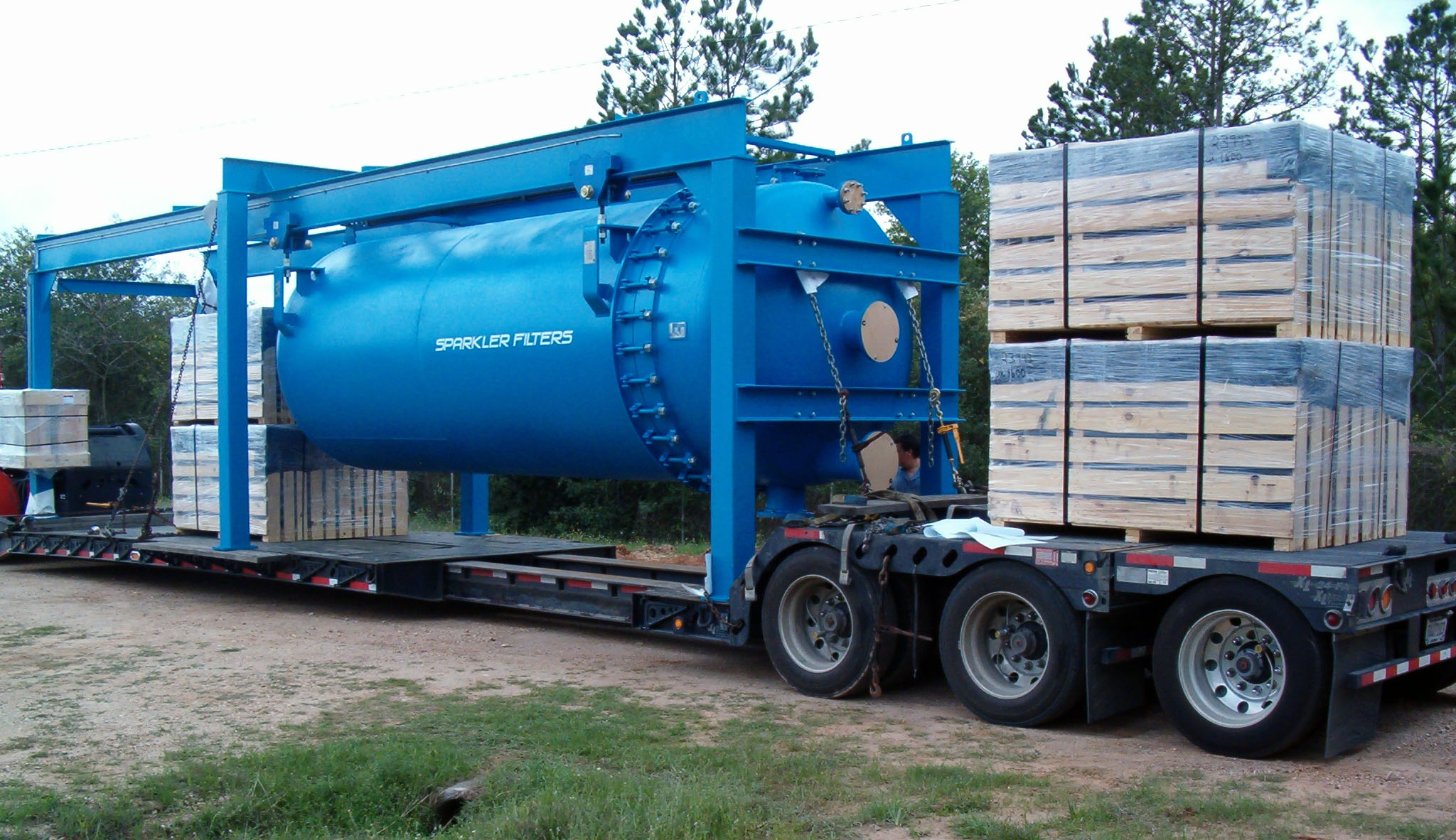
MCRO Leaving

Filter Vessel Sizes- 24", 36", 54", 60", 72", and 84"

Available Filter Plate Materials– Carbon steel, Most Stainless Steels, Many Exotic Metals, Polypropylene

Available Filter Housing Materials– Carbon steel, Most Stainless Steels, Many Exotic Metals (all materials can be supplied with linings)

Filtration Area– Up to 3400 sq. ft.

Types of Filter Media Available– Woven Wire, Membranes, Felt and Cloth

Alternate Features– Steam Jackets, Inlet Distribution Headers, Tank Bottom Flush, Packing Flush, Additional Porting, Quick Opening Closures, Sectional Outlet Manifold
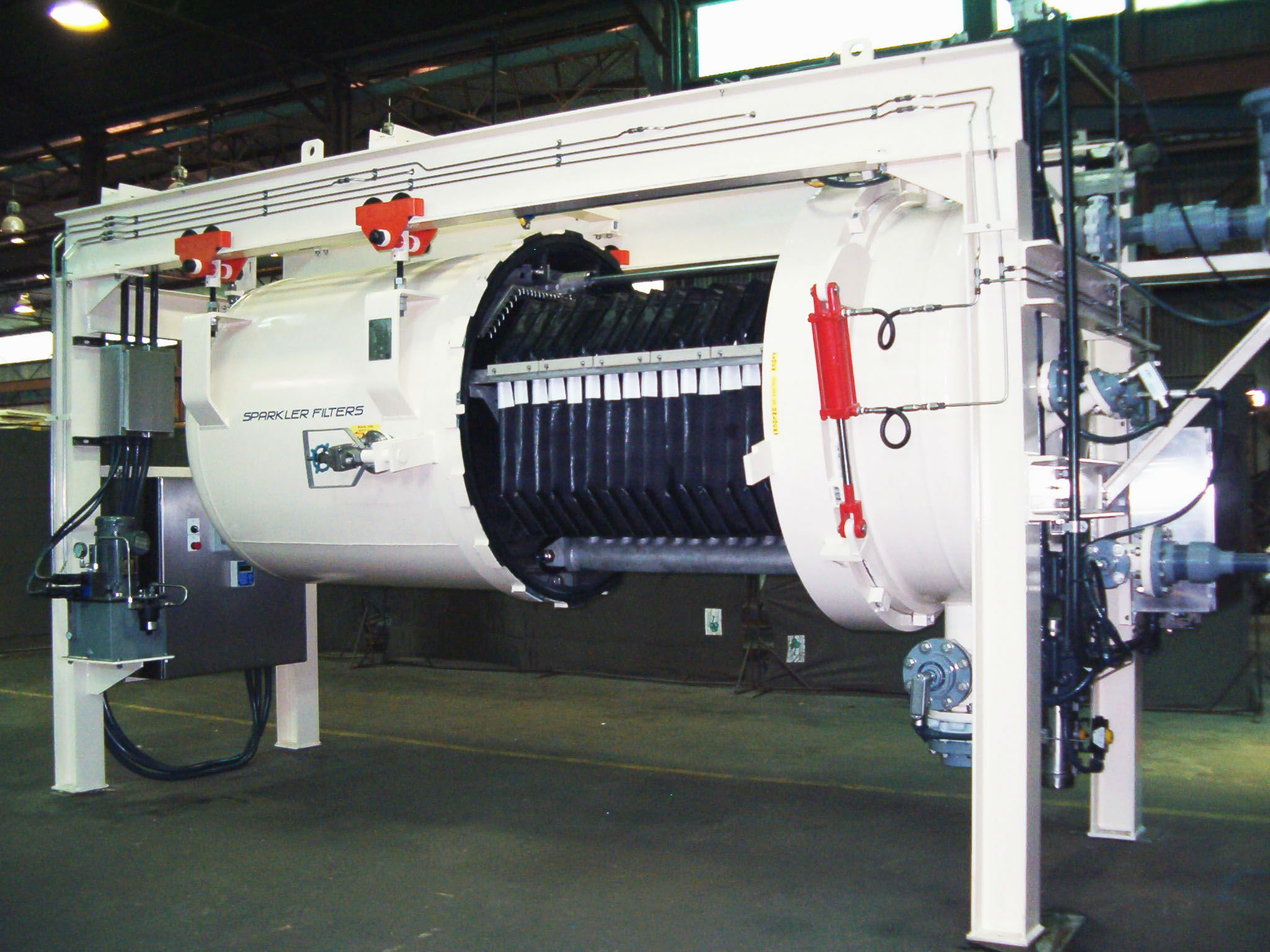
MCRO Full


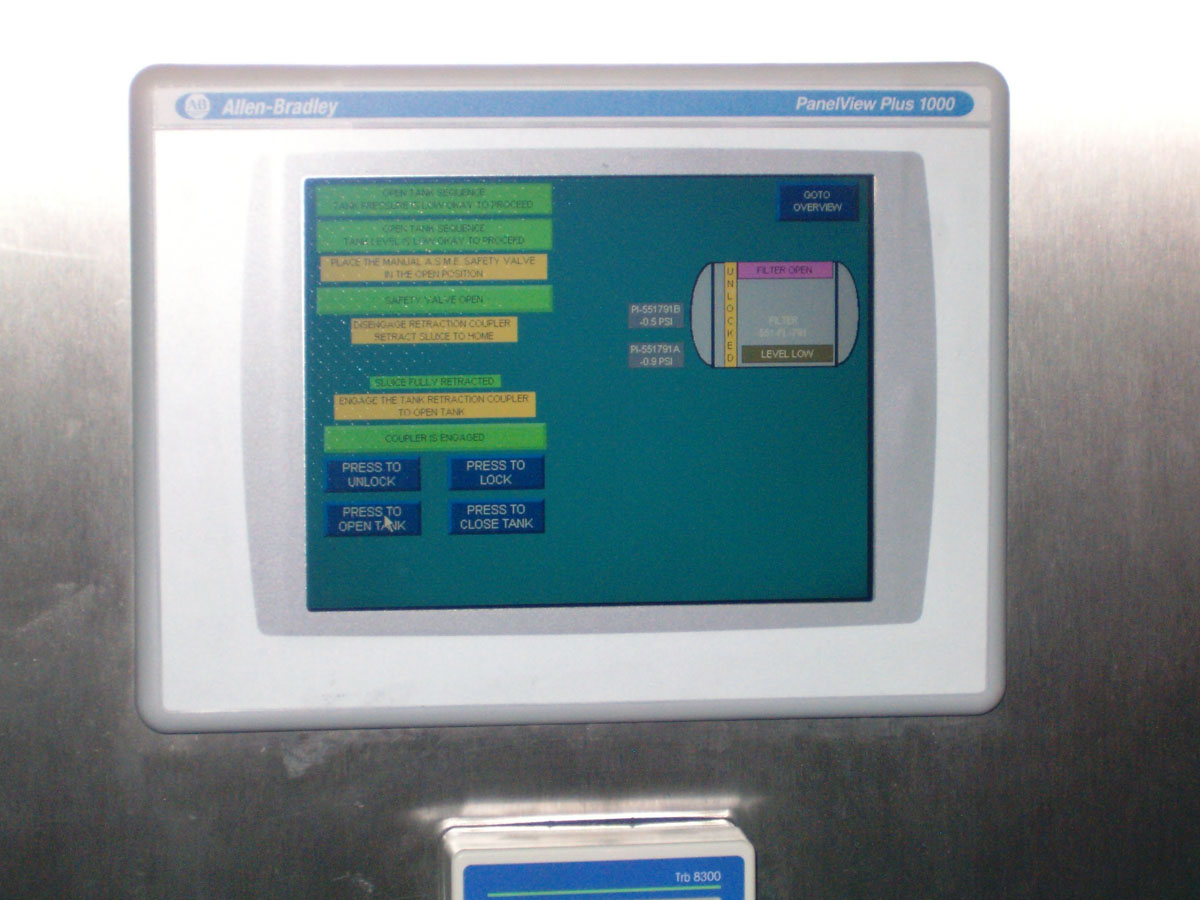
Automation

Automation Control 


MCRO Filter_Plate

MCRO Vertical Filter Plates


Control Panel


Control Panel


controlpanel1993-web 5
Control Panel (1993)
 

Sparkler Filters

Contact Us